
Flying Technicians
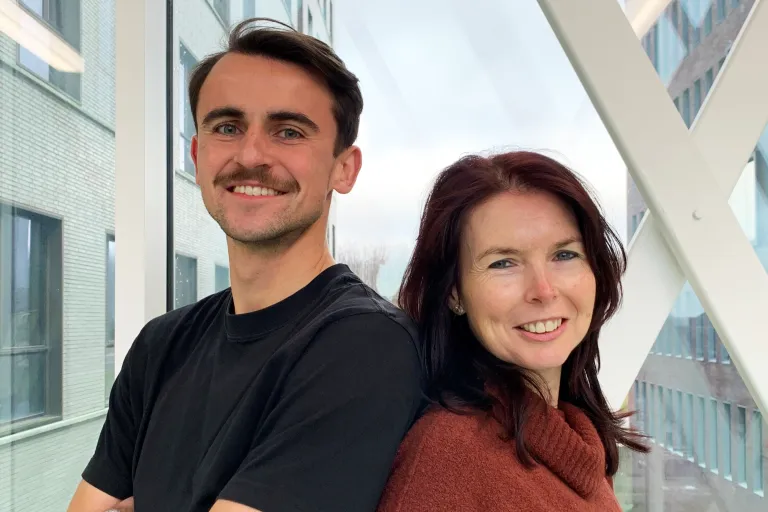
We're here to provide expert hands-on support for translational research projects.
We have two dedicated translational research technicians - Christine Michiels and Niels Vidal - who support translational research projects by validating disease targets and setting up screening assays. See below some of the projects they have worked on.
Brain-on-chip
Brain-on-a-chip is a next-generation in vitro model designed to replicate human neuronal networks under both healthy and disease conditions, done at the Verstreken lab. In our research, they generate this model by first differentiating induced pluripotent stem cells (iPSCs) into three key neuronal progenitor cell (NPC) types that are implicated in Parkinson’s disease (PD), using both wild-type and PD-mutant lines. After rigorous quality control, these NPCs are plated onto High-Density Microelectrode Arrays (HD-MEAs), which enable real-time, high-resolution monitoring of neuronal activity as functional networks form and mature. Because this platform supports longitudinal electrophysiological recordings across developmental stages, it allows the team to detect phenotypic differences between healthy and PD-affected neuronal circuits—a critical step for validating therapeutic targets and screening potential drug candidates.
Christine's role in this project focuses on ensuring the robustness and reliability of the system. She conduct quality control of NPCs using immunocytochemistry and optimize the cell plating protocol on HD-MEAs to promote consistent network formation. These optimizations helped overcome initial variability in cell attachment and network development, resulting in more reliable downstream electrophysiological recordings, which Christine also carries out at multiple developmental time points.
By incorporating three distinct neuronal subtypes specifically affected in PD, this system provides a highly accurate and reproducible disease model, advancing both fundamental research and drug discovery efforts.
LRRC37B Modulation
As a research associate working on translational projects, Niels had the opportunity to contribute to the project of Dr. Baptiste Libé-Philippot in the lab of Prof. Pierre Vanderhaeghen, in collaboration with the lab of Prof. Joris de Wit and the Switch lab.
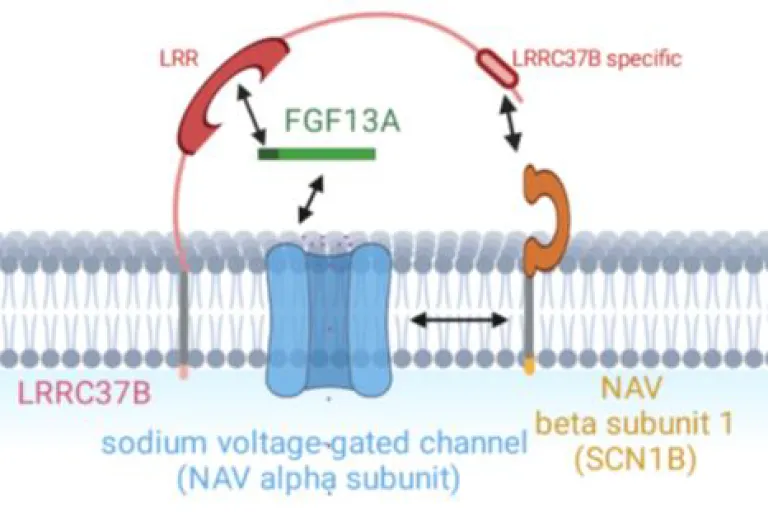
Niels joined a fascinating project and question: to which extent do human neurons function differently compared to the ones of other species and does it have impact on our brain disorders? When he arrived, the lab had already discovered a receptor protein called LRRC37B, unique to great apes, and that can modulate how our neurons generate action potentials, the neuronal electrical signals. They also identified how: by binding a secreted protein, FGF13A that can act on voltage-gated channels, the proteins that generate action potentials.
Niels' contribution was to identify which part of the FGF13A protein is key in its interaction with LRRC37B and the channels. These findings are shedding new light on our comprehension of brain function. More importantly, his contribution could have an impact in the medical field since we can use the knowledge of which part of FGF13A binds to LRRC37B and channels to try to modulate the excitability of human neurons. This is relevant for brain disorders like epilepsy, which is a disorder of neuronal excitability, and for which we need more therapeutics to treat many drug-resistant cases. This could be made possible by the synthesis of small proteins (peptides) to modulate the LRRC37B – FGF13A – channel interaction (e.g. peptidomimetic). Potentially, this could lead to novel therapeutic approaches, ignored so far because they are unique to our species.
Ultimately, this research project, led by Dr. Baptiste Libé-Philippot, resulted in a publication in Cell and a patent, on the basis of which they move forward towards translation and valorization of they findings.